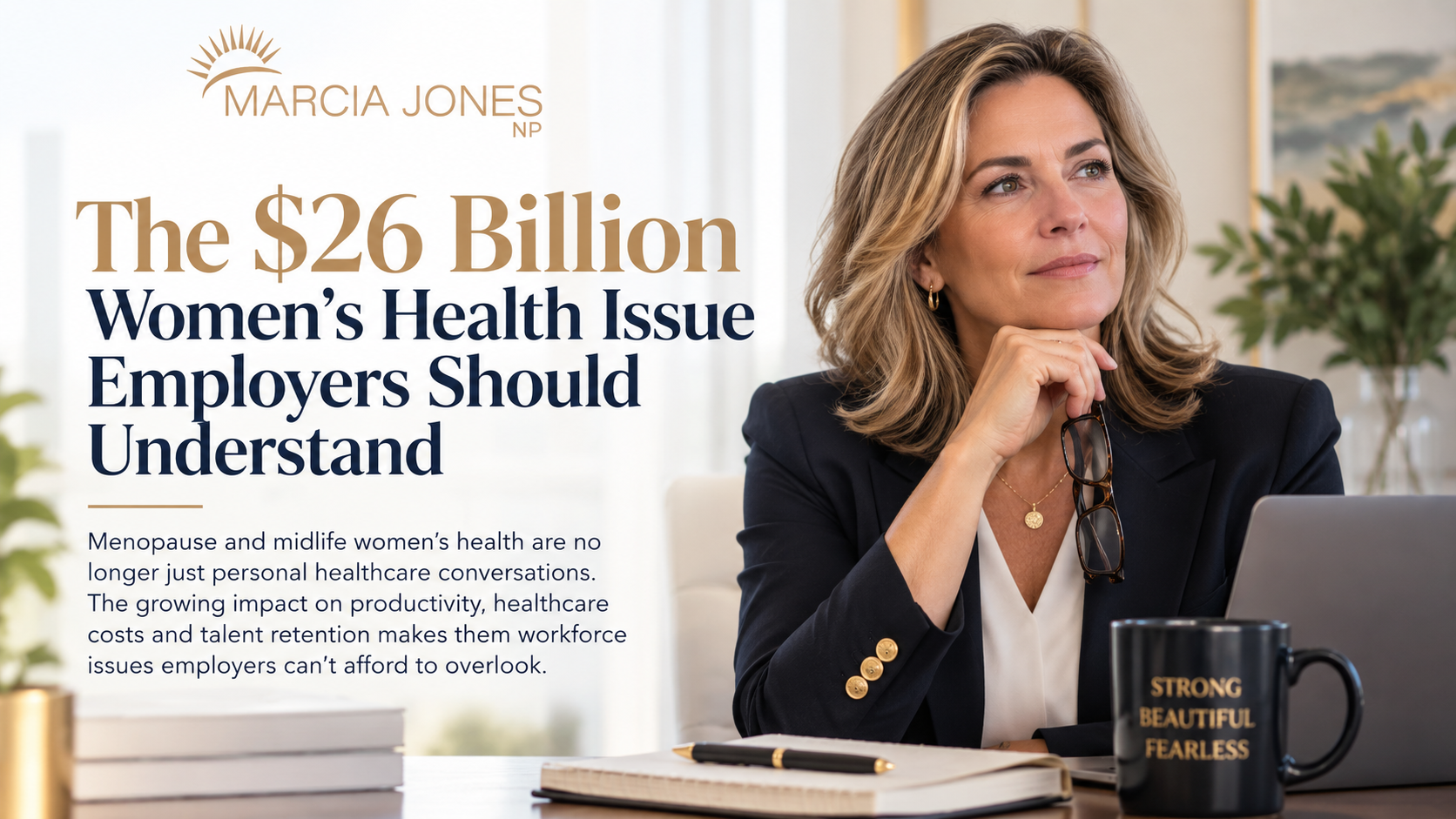
The $26 Billion Women’s Health Issue Employers Should Understand
Menopause Has Become a Business Issue. Is Your Workplace Ready?
The International Labour Organization is putting menopause, productivity and talent retention in the same conversation. Employers should be paying attention.
For decades, menopause was treated as a private health matter—something women were expected to manage quietly while continuing to perform at work as though nothing had changed.
That conversation is changing.
In June 2026, the International Labour Organization (ILO) highlighted menopause as a workplace issue with implications for productivity, talent retention, gender equality and economic performance.
That matters.
When one of the world's leading organizations focused on labor and employment begins talking about menopause not simply as a health issue, but as a workforce issue, HR leaders, benefits professionals and organizational leaders should take notice.
657 Million Women
The ILO reports that an estimated 657 million women worldwide are navigating the menopausal years while employed.
For some women, this transition has little effect on their ability to work. For others, symptoms can affect sleep, energy, concentration, memory, mood and physical well-being.
The workplace consequences can include absenteeism, presenteeism, reduced hours and, in some cases, leaving the workforce altogether.
In the United States alone, research cited by the ILO estimates approximately $1.8 billion in lost work time annually associated with menopause symptoms. When healthcare expenditures are included, the estimated economic burden rises to approximately $26 billion annually.
But those numbers only tell part of the story.
Behind them are experienced women who may be leading departments, managing teams, caring for patients, mentoring younger employees, overseeing operations and carrying years—sometimes decades—of institutional knowledge.
Losing those women has consequences that extend far beyond a sick day.
This Is a Talent-Retention Conversation
One of the most important points in the ILO discussion is the relationship between menopause and workforce attrition.
The women experiencing these changes are frequently in the middle or later stages of their careers. Many have reached positions that required years of education, experience and organizational investment to attain.
If symptoms begin affecting sleep, cognitive function, energy or overall well-being, the workplace may experience the effects long before anyone identifies the underlying issue.
A woman may begin questioning whether she can continue performing at the level she once did.
A manager may see declining engagement without understanding why.
An organization may lose an experienced employee without ever recognizing that better education, healthcare navigation or workplace support could have changed the outcome.
The cost of replacing experienced talent isn't simply the cost of recruiting another employee. Organizations also lose knowledge, relationships, leadership capacity and experience.
Menopause Is Only Part of the Midlife Women's Health Conversation
There is another important distinction employers need to understand.
This conversation cannot begin and end with menopause.
Perimenopause can begin years before a woman's final menstrual period. During these years, women may experience changes in sleep, menstrual cycles, body composition, metabolic health, stress tolerance, concentration, energy and emotional well-being.
And hormones do not function in isolation.
Women's health during midlife involves an interconnected picture that can include hormonal changes, metabolic health, thyroid function, sleep, stress physiology, nutrition and other health factors.
That is why simply adding the word menopause to a benefits package isn't enough.
The larger opportunity is to help women understand what is happening in their bodies, know where to seek appropriate care and feel supported in remaining healthy and productive throughout this stage of life.
Employers Don't Need to Practice Medicine
HR departments should not diagnose women.
Managers should not become menopause experts.
And employers should not insert themselves into an employee's private healthcare decisions.
What organizations can do is create an environment where women have better information, managers understand that midlife health can affect the workplace, benefits are easier to navigate, and employees know where to turn when they need help.
Global consensus recommendations on menopause in the workplace have called for menopause to be incorporated into broader workplace health and well-being strategies, alongside supportive organizational cultures and appropriate involvement from HR and occupational-health professionals.
That can include education, leadership awareness, thoughtful policies, appropriate flexibility, healthcare resources and benefits strategies that recognize women's changing health needs across their careers.
The Workplace Is Already Changing
For years, workplace women's-health benefits concentrated heavily on pregnancy, fertility and family building.
Those benefits remain important.
But women don't stop having specific healthcare needs when their reproductive years end.
Employers are beginning to recognize the gap. Benefits consultants, healthcare organizations and workforce leaders are increasingly discussing menopause-specific benefits, education and workplace policies.
The ILO entering this conversation is another significant signal that women's health in midlife is moving from the margins of workplace wellness toward a broader workforce strategy.
The question for employers is no longer simply:
Should we talk about menopause at work?
A better question is:
Do we have a strategy for supporting women through the years when they may simultaneously carry some of our greatest professional responsibilities and experience some of their most significant health changes?
From Awareness to Action
Organizations don't need another wellness initiative that employees barely use.
They need a structured way to understand where gaps exist and determine which changes make sense for their workforce.
That is the purpose behind my U.N.I.Q.U.E. Woman Workforce Method™—a six-phase framework designed to help organizations identify overlooked women's-health challenges and move from awareness and education toward meaningful, sustainable workplace change.
Because women's health isn't just a healthcare issue.
It's a workforce strategy.
And as the national and international conversation continues to accelerate, organizations have an opportunity to be proactive rather than waiting until experienced women begin walking out the door.
If you lead HR, benefits, workforce strategy or organizational development and want to explore what supporting women through midlife could look like inside your organization, I invite you to start a conversation.
Marcia Jones, NP is a Nurse Practitioner, women's health expert, speaker and healthcare strategist with 30 years of experience in nursing and healthcare. Her work helps organizations address the overlooked health challenges affecting women in midlife through education, workforce strategy and the U.N.I.Q.U.E. Woman Workforce Method™.
Sources
International Labour Organization. Menopause at work: addressing productivity loss, talent retention and gender equality.June 19, 2026.
Rees M, et al. Global consensus recommendations on menopause in the workplace: A European Menopause and Andropause Society position statement. Maturitas.
Faubion SS, et al. Impact of Menopause Symptoms on Women in the Workplace. Mayo Clinic Proceedings.
Invite me into the conversation at your organization.
Marcia Jones, NP is a women’s health expert, speaker and creator of the U.N.I.Q.U.E. Woman Workforce Method™, helping organizations address the overlooked health challenges of midlife and create workplaces where experienced women can continue to thrive.

Marcia Jones, NP is a women’s health expert, author and speaker with more than 30 years in healthcare. She partners with organizations to bring modern women’s health education into the workplace, helping women protect their health and potential through midlife while helping employers strengthen and retain an experienced female workforce.